Learning to Be Alone (creative nonfiction)

Not the first time I was alone, but the time I learned to love being alone. Art school. Summer arts school between my junior and senior years of high school. I went for writing. I had two writer roommates. They put the writers together because they said we had a tendency to keep odd hours and they didn’t want us keeping the dancers or singers awake all night because they had to wake up early and actually work for their muse. Lazy cusses that we were, our first class wasn’t until nine and we only had two classes and one group activity a day. The rest of the time we were supposed to be typing away at our keyboards making Shakespeare or whatever. We were supposed to be getting inspired. We were supposed to be collaborating. We were supposed to be bouncing off the walls with creative energy.

Mostly I remember wandering through the halls exploring myself.

That sounds unnecessarily sexual. If I were to say exploring myself from the inside, that doesn’t make it any better. Feeling myself from the inside? No.

Understanding my own soul better. There we go. Expanding. Spreading my arms into the empty space.

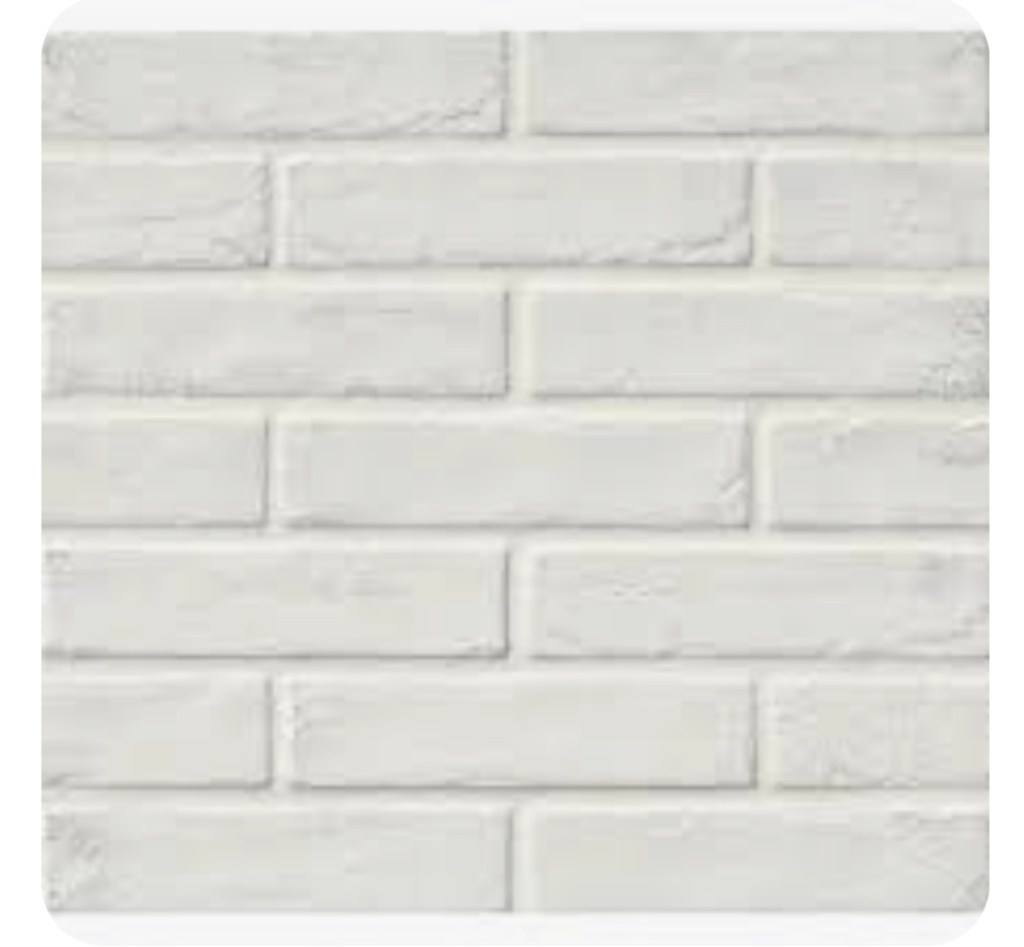
The halls were white painted brick and white tile, fluorescent lights. Someone in my class, more brilliant than I in that moment, said the halls looked like Communism. I just about fell out of my tree laughing at that at the time. I’ve used that joke several times since. I’ve probably used it more than the person who cracked it in the first place. I wonder if they even remember. I wonder if their own humor followed them the way it did me.

The halls of the funky math and science building at Vanderbilt looked like Communism. The mental hospital I was in on a hold that one time—that looked like Communism too. Math and mental health and art school. There should be a connection there. Art led to math led to the nuthouse. Maybe the more talented writer who cracked the joke in the first place could do more with that than I can in this moment. Don’t expect much of me. I was great in art school, I did marginally at math, and I was not one of the popular kids at the nuthouse. It was hard to be alone there. I made myself lonely in math when I didn’t need to be and at art school I was alone, but damn I was never lonely. Damn I loved being with myself then.

There was a smell in those halls. It was the smell of freedom. I had been to summer camp before—lifetimes of summer camp—but here I had all this time to do with as I pleased, to be plying my art, and no one was up my butt to be cheery or play Red Rover. Our meal times were even flexible.

I was planning a good roam one afternoon and went to the cafeteria first to get a sandwich. I was in the middle of a bad attempt to wrap it in a yellow napkin that was too small for the job, when a handsome man who worked there, I’m sure one of the regular students, so maybe all of 20 years old, came over to me and offered to wrap it up for me. That was the kindest thing.

I thought I was being so sly. I wasn’t even sure we were allowed to take food out. I was being on the down low and he busted me—busted me, then helped me out and in such a sweet tone. I wonder if he was a writer too or if he had found his personal space there—had explored his own self from the inside wandering down those halls, so he understood the lure and understood the need to have portable sandwiches for the journey.

-M. Ashley

I Have a Book of Guy du Maupassant Stories (creative nonfiction)

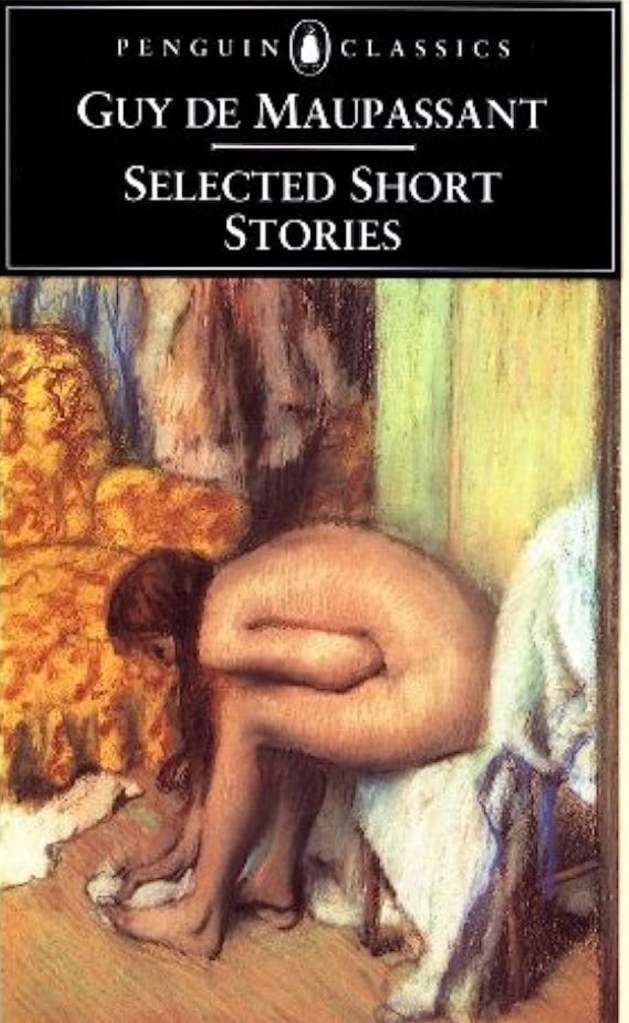
I have a book of Guy du Maupassant stories. On the cover is an impressionist painting of a woman coming out of the bath and drying her feet. I assume it’s by Degas because he’s the impressionist I did my high school French class report on and, as far as I’m concerned, all impressionist paintings that aren’t famously and obviously by some other painter, were painted by Degas.

Degas started going blind at the end of his career. Tragedy. Tragedy for him and for us. I am legally blind. The tragedy is merely personal. The world does not mourn a loss over the fact that reading, for me, is slow and difficult. I have to be choosy about what I read because it takes so much time and effort. In college, I chose to read that book of Maupassant stories. After college, I chose to read it three more times.

Those stories can be a little like Far Side cartoons. Sometimes you don’t get it on your first shot. Sometimes you need someone to explain the world and the ending to you.

My junior year of college, I had a little time between this and that, who knows—I don’t remember the obligations, I only remember the time in between. There was an in between place on the Vanderbilt campus where four paths met in a sort of pedestrian roundabout. At the center of the circle was a planter overflowing with the campus’ signature Spring yellow tulips. At the center of the planter was a blossoming dogwood, shedding its white blossoms, covering the ground in floral snow. The circle was bordered by ancient shade trees and magnolias. There were antique style street lamps dotted around. At night, they cast pale blue efficiency light. There were glossy wooden benches.

I was alone in the circle, in the in between time, in the in between place, sitting on one of the glossy benches. I was reading Guy du Maupassant. It was a bliss time. A life is only blessed with so many, and this was a precious one of mine.

I read a story about a man who observes another man’s gaudy, worldly treasures and also his beautiful daughter and wife. That’s the whole of the story—the observations of the one man and the bragging of the other on all his gaudy, worldly possessions. It’s the kind of story that, when it ends, you flip the pages expecting another ending and find only the beginning of another story. Maybe the printer made a mistake.

I stood up from my glossy bench, chewing on it. I went to my other obligation. I went back to my dorm room overstuffed with the detritus of a busy college career. I called my mom.

I told my mom about the story and asked her what she thought it meant. She said it was quite obvious, wasn’t it? The treasure was the women. In all that house full of stuff, (I looked around my own room and was embarrassed), in that house full of stuff,, (I thought about how often I had walked through that in between place circle with its gold tulips and dogwood snow and ignored it on my way from stuff-to-do to other stuff-to-do and was embarrassed), in that house full of stuff, the women were the treasure. The family bond was the most precious thing,

I thought about how often I neglected to call home in favor of some seemingly more pressing or interesting stuff. I was embarrassed. My life was stuffed with such stuff.

I told my mom I got it now. I told my mom she was an epiphany. I asked her how her day had gone.

-M. Ashley

Hairy Larry (creative nonfiction)

Hairy Larry gave me the worst haircut I have ever had. I think he was drunk at the time. It was only 6:00pm and he was in the kitchen with the rest of us, all bar friends, but also all sober. He was drunk I think, but I let him cut my hair anyway. My hair was a mess and needed some kind of attention. He was drunk, I figured, but he was always drunk, so I also figured, at least drunk, his hands wouldn’t shake.

He, himself, had ALL the hair. Pompadour and chest hair that would make a pectoral toupee jealous. He had a beard, well kept, but still mountain man worthy. His eyebrows, also well kept, but awnings enough that he never had to worry about the sun in his eyes.

He was a hairdresser by trade, or so I was told. Doing me in the kitchen was a special kindness, a special concession for bar friends. Also, doing me in the kitchen meant he didn’t have to pay a kick to his salon owner. He needed that money for booze.

He asked me what I wanted. I never know the answer to that when hairdressers ask me that question. I usually go months and months between haircuts and I never have learned to speak the language. By the time I gave myself to Hairy Larry, it had been more than a year—longer than the time I had moved into that house.

I told him I didn’t know how to describe what I wanted. It went something like medium length and, you know, not poofy. The not poofy thing is the hard part as my hair is thick and naturally curly. When I was a teenager in the nineties, I would always leave the hairdresser looking like some kind of hybrid poodle/Dolly Parton creature as my hair is as naturally platinum as it is curly and the hairdressers could never resist exercising their mad engineering skills and making it reach the rafters.

I always went home after hair appointments and washed the height out. I didn’t mind if the hair on the top of my head had no volume and the curls throughout weren’t quite as curly as they could have been. I wanted to look something like me and not something like poodle/Parton/other.

So, for Hairy Larry, the not poofy part was the challenge. I was in my late twenties by this point and although I knew very little about what I wanted for my hair, for my life, for this very moment, I knew at least one thing I didn’t want. I knew at least several things I didn’t want. At that time, I think I defined what I did want almost exclusively by what I didn’t want. I didn’t want poofy hair. Anything but poofy hair. No matter how you get there, Hairy Larry, anything but poofy hair.

Anything but the life I had been leaving before I moved into this house with three housemates, four cats, and three dogs between us. Anything but that. Kitchen haircuts and all. Anything but going back. Anything but the poodle of my teens. Anything but the you-are-not-who-you-are poof of someone else’s engineering.

-M. Ashley

Lame Zebra (creative nonfiction)

Something as mundane as I found out he was courting other women, and yet I went on, enmeshed, with him anyway.

Courting is a nice word for manipulating. Affairs of the imagination, choosing which flesh to realize.

I sat in the car with a friend after finding out. Devastated. She told me it isn’t the lame zebra’s fault for being lame. It’s the asshole lion’s fault for going after lame zebras. I didn’t mind her calling me lame. I was lamer than that. Lame was an understatement. I was more like hobbled. The asshole lion the kind of asshole that hobbles the naive zebra then chases after her. He made her an easy catch.

I told my friend I was done. We arrived at my house and, in the dark, in my driveway, before opening the car door to let myself out, I told her I was done with him. That was it and it was over and I was done.

She patted my head and said sympathetically, “No you’re not.” A sentence of death and destruction and many, many more months of eating my heart out.

It sounds stupid, but time was the only thing that healed it. Time and he got married to one of his other lame zebras. He said she made him feel like a teenager again. That’s likely because she was the worst hobbled amongst us and, compared to her, he could run like the wind.

He wrote to me, “Since I’ve been with her, I’ve been running. Can you imagine? Me? At my age? Running?”

I wonder how long that lasted before she gave up and he, at his age, convinced her life was easier sitting, limp and licking his chops as she puts on weight and wonders what happened to her legs that used to run so swiftly, kick so high.

I took up running myself a few years later and I’m faster now than I ever was. I have no hurt for him anymore. I hurt for her. I’m sure I won’t be seeing her at any local, smalltime races anytime soon. The LA Marathon is bound to miss her as well. She might have wanted to do that before she was forty only a little less than she was terrified she wouldn’t be married by then.

Better wed and walking then a spinster fleet of foot.

I feel you sister. I do.

-M. Ashley

Mom Bling (creative nonfiction)

My dad, divorced from my mother for more than ten years at that point, told me that what she really loves is jewelry. She has the bling gene, as we call it. That’s not what he said. That’s a little too clever, a little too caring for my dad.

She loves costume jewelry, but has a grounding in the real. Always reality on her fingers. On her left hand, she always wears a blue topaz ring she had made. The topaz is set in a simple, modern swoop of solid gold. It’s meant to show off the stone, bold as a blue diamond. The way she wears it, you would swear it was a diamond.

On her right hand, she wears a ruby set in a cluster of diamonds. The ruby is her birthstone. It is pigeon blood red. It is the best you can get.

A little silver ring I gave her. A simple gold chain bracelet on her left wrist.

A touch of reality around her neck too. A shy diamond set in another modern swoop of gold, smaller, more delicate—a stylized teardrop. It sits against a black backdrop, created shadow. The diamond is from her mother’s engagement ring—her mother’s first engagement to my mother’s father.

They took that necklace off my mom when she went into the hospital so it wouldn’t interfere with the MRI. They took her rings and bracelet too.

She had to be in the hospital alone because of the virus. She was there a week. I called her every day, at least once a day. She told me many times about how they had taken her jewelry. She told me many times she was sure she would get it back. She had faith they were good, honest people, and that she would get her jewelry back even though she couldn’t quite remember where they had put it in her room. It seemed she thought about that more than she thought about her infection, her surgery, the second attempt at her surgery, and what life would be like after.

She recovered enough to come home. Once home, it took her another two weeks to recover enough physically and mentally even to want to put her jewelry on again.

She fished it out of her purse. It was all jumbled up in a green, semicircular plastic holder that looked like something you would put false teeth in. All that reality. All her reality. All those precious gems.

She put the topaz on first. This was what she earned, her badass career—the woman she was before retirement who made male lawyers quiver and go limp. The woman who could afford a topaz like that and all that swoop of gold.

She put her ruby on next. This was the woman she was born. Badass in essence from the start. The little girl who chopped down an entire row of bird of paradise in front of her mother’s house because she didn’t like the way they looked at her when she got home from school. She planted snapdragons there instead. Their fierce little faces were sweeter.

The gold bracelet. She fastened that on herself. She bought it somewhere borderline seedy while on a Caribbean cruise—her first. First of many with a group of globetrotting women, badass as she was, exploring everything, planting their flags everywhere.

She needed help with the necklace with the engagement diamond. I tried for more than fifteen minutes and couldn’t get it. The clasp is so tiny, I wondered how she ever got it on in the first place as her well kept fingernails are long and lustrous and mine are bitten to the nubs. It should have been easier for me having my actual fingertips to work with, but it was impossible.

She sighed as I handed it back to her. She looked down. “I don’t like to be without it,” she said. “You wouldn’t believe how easily the nurse took it off.”

Finally, she slid the little silver ring with the created pink gemstones I gave her for her birthday on to her little finger. The ring had turned black. Something they injected her with had burned her inside, leaked out of the injection site, ran down her arm, and burned off whatever real silver there was on the ring. This was before the MRI. Before the box. Before she was bereft of everything. Before it was all protected.

That silver ring I gave her—the timid whisper that is my life’s contribution to hers, turned black in her illness—she wears it anyway, right alongside her gold and precious. She wears it anyway.

-M. Ashley

Happy Mothers’ Day everyone!

A Little Stuffy in Here (creative nonfiction)

The breakfast with Jeana at the botanical gardens in Nashville. You never saw so many nouveau riche people in one place at one time. Not one colored face among them.

They all sat on the lower level, next to the wide windows overlooking the butterfly garden, but they were mainly looking at each other, what was she wearing, who was she with, who should we say hello to, what hands should we shake, how many rungs can we climb this beautiful Sunday morning we are spending with our faces buried in our mimosas and our backs to the beautiful garden.

Or at least this was our impression as we sat on the upper level, close to the door we should probably have been grateful they let us through in our jeans and t-shirts. Clean jeans and t-shirts, mind you, but jeans and t-shirts nonetheless. Mine was burgundy and had a baseball style swoosh on it with the words, “Think dark thoughts.” One of my favorite t-shirts of all time, and we were. We were thinking dark thoughts about these people when these people we assumed didn’t want us there, were probably not thinking about us at all.

At the brunch buffet table, this lady in a white dress with heels way too high for a garden… we were in a freaking garden after all… elbowed me over the eggs. Elbowed in the boobs, over the chafing dish full of rubbery eggs. Strangest things. I suppose my low class ass wasn’t moving fast enough and she was at the eggs in a hurry because maybe she had some ass to kiss back at her table right then or the ass wouldn’t be ripe for kissing anymore.

Dark thoughts.

At our table on the higher level, the undesirable section, we were the only table up there after all, the waitress came over to fill our water glasses. Jeana, with her Jeana wit said to the waitress, “How are you today.” Fine, the waitress said. “A little stuffy in here, ain’t it?” The waitress smiled in a way she wasn’t supposed to and said, “Sometimes.”

-M, Ashley

Outside My Preteen Window (creative nonfiction)

I’ve lived in three of the four bedrooms of the house I grew up in. I started at the end of the hall, moved across the hall to the front of the house, then back across the hall to the biggest of the little bedrooms, at last. When I lived in the bedroom at the front of the house, my window looked out on the walk, the lawn, the sidewalk, the streetlight that was supposed to be orange but was always broken, the street, the across-the-street neighbor’s house, and the across-the-street neighbor’s house’s front windows–their living room and a little square bedroom just like mine.

I slept with the head of my bed up against the window. I liked to look out through the blinds at night and contemplate the mysteries of junior high vis a vis the mysteries of the mostly empty street, an unhurried car passing once in a great while.

One night, my boyfriend and two of his friends came to the window. They whispered and laughed and sang and coaxed me out without permission. I think it might have been all of 10:00pm. We were doing what good kids walking the razor sharp line between good kids and slightly less good kids do. We thought we were stealing the world. It’s good we thought that.

Just now the thought: I have had romantic experiences in my lifetime after all, or at least this one–and the several times after that it also happened once they figured out I was so easily persuaded. Once they figured out I was just bad enough.

I came to expect them. I prepared myself for it. I dressed. I made sure my hair was ok, but not too ok. When my best friend came to my house for a sleepover, I made sure her clothes and hair were also ok, but not too ok. She was the best of the good kids. To her, we really were stealing the world. She looked afraid when I told her they would come. She went along anyway.

-M. Ashley

Talk About Disease (creative nonfiction)

It puts me ill at ease when my mom starts talking about my grandparents’ cancer—how they were dying at the same time, in hospital rooms next to each other. Lung cancer.

They smoked together. I’m sure he lit her cigarettes when they were dating. A sexy gesture. A sexy pull. Firsthand smoke to firsthand smoke. Breathing in each other’s breaths. Secondhand to secondhand. Thirdhand smoke in each other’s clothes. They breathed it in when they were dancing close.

Thirdhand smoke in their clothes still, even their clean clothes that my mother had to divvy up amongst relatives or donate after they passed. You never really can get rid of the smoke, the breath, the illness, the cancer. It grows and grows.

My mother’s marriage was falling apart as her parents were dying. My father was useless.

One day, after having worked a full day and spending most of the evening sitting at her parents’ bedsides, my mom came home to find that my father had put my sister and I to bed in our day clothes. She tells me he didn’t even bother to take our shoes off. That’s the part she couldn’t get over.

Unemployed and couldn’t be bothered to take our shoes off.

Unemployed and he would do the laundry at three in the morning with all the lights on in the house and Hank Williams roaring from the record player.

She wasn’t spending her evenings with him. He couldn’t throw a toddler’s tantrum, so he chose Hank Williams instead and, “You did say you wanted me to do the laundry, didn’t you?”

The cancer grew and grew.

My grandparents died and my mom got a divorce in the same year.

I once asked my mom if she was glad my grandparents weren’t around to see her get divorced. I asked her if there was some relief in it for her—in their passing. I don’t remember how she answered. I know she spoke, but all I really remember is the silence while she thought about it.

The hospital was in a rough neighborhood. My mom had to go into the parking garage each night wielding mace. She had a full time job, two kids, one of them (me) disabled, and, as I have mentioned, a useless husband. She is a badass. That’s the her in her I hope to breathe in.

-M. Ashley

A Hill I Once Knew (creative nonfiction)

My Uncle Chuck’s house backed up against one of the humps of Little Mountain. As far as I know, Little Mountain has two major humps separated by two apartment complexes, two tracts of homes, two schools, and, lately, a strip mall, an iHop, a McDonals’s and a Starbucks always bustling with CalState Berdoo students.

My Uncle Chuck’s house butted up against the back of it and there was a small piece of it in his yard. I knew it intimately. He landscaped the crap out of it. He not only planted gorgeous plants everywhere, but he dug great paths and steps into the dirt so my sister, my cousins, and I could go run and chase all over it, minding the ankle-eating gofer holes of course.

We used to love to dig holes in that hill ourselves. My uncle had shovels for us all and, wherever he was working on some worthy project on the hill, there were my two boy cousins and I also working, digging holes to China or, if we were really ambitious, digging a hole large enough for us to sit it. Sometimes that took days, but the prestige that came with climbing into your own hole was well worth it.

-M. Ashley

Please Don’t Stop Writing (creative nonfiction)

It is hard not to get sentimental when talking about my teachers. I have so many well-worn anecdotes. I’ve gone through them all so many times verbally, it seems they would be a complete bore to talk about. There is one though that I think I only ever jotted notes down about once. It’s often too much.

At first, I hated my poetry professor at Vanderbilt, Professor Daniels. She was hard on me. She spanked my ego good and I didn’t like it. I thought I was some kind of hot shit going into her class, and man oh man, did I find out otherwise. She was cold and exacting and had no warm and squishies for me whatsoever. Even after I earned a modicum of her respect, I was still nervous around her. I would drop things and turn around in circles trying to find my chair. It was perpetually like being on a first date.

She was a tiny woman, apparently a lot older than I thought she was. I made a reference to an 80’s band once and she said she wouldn’t know anything about it when here I had assumed she was only maybe a decade older than I was. For all her hardness, there must have been a youth about her I perceived. My legally blind eyes could not see her wrinkles so my mind registered her as a bitter eighties Gen X St. Elmo’s Fire type instead of ex-hippie observer and poetry writer-abouter.

I was being abused at home. I met her at the grocery store, me wearing a full length houndstooth wool coat in 80 degree heat to cover the bruises and burns. She pulled her cart up next to mine. She took time to talk to me. I told her I had to leave Vanderbilt, which was very hard. She said to me, pleading, “Please don’t stop writing.” It stays with me, that she would plead with me this way. I keep it in my own head when I’m about to give up.

Maybe I don’t talk about it because I can never quite get the emotion of it. I always seem to need to invent a touch of hands or squeeze of the wrist to go with it. The truth is, she didn’t touch me at all. Or at least, I think that’s the truth. The memory is fuzzy. I think I have been lying to myself for so long in my memory about that touch, that I truly don’t know anymore. Knowing her character though, I don’t think there was one, which makes my soul burst with longing.

-M. Ashley

I am going to start including audio recordings of me reading my posts for my visually impaired friends, or really anyone who enjoys what I hope will be a good listen. Being visually impaired myself, I’m a little ashamed I’ve had this blog for a million years and am only thinking of this now. Hear it here: