Exceptional Vehicles (creative nonfiction)

All you people take driving for granted.

I can’t drive because I’m legally blind and it is one of the most horrible kinds of crippling, or at least I imagine it is. Having never been an independent driver, I wouldn’t know.

I don’t know what it’s like to have a notion to go somewhere and just go. Cold night, playing Freeze Out like my dad used to do with us girls in the car—all four windows down, whoever rolls theirs up last is the winner—but with only myself as competition. I’ve never had to keep myself awake with only myself and the double yellow lolling out endlessly before me in the dark dark desert between here and Las Vegas.

I don’t know what hitting 100mph is like on that same highway, in the middle of the night, when I’m sure the CHP isn’t watching.

Yellow line, lulling you to sleep. Blaring the radio to fight it, Botts’ dots rumbling your eyes open again. The danger. The responsibility. The irresponsibility. The win when you get there somehow, miraculously, safe.

I wish I could stand somewhere alone that I drove to alone that I decided to drive to alone, and that no one but me, alone, would know about it.

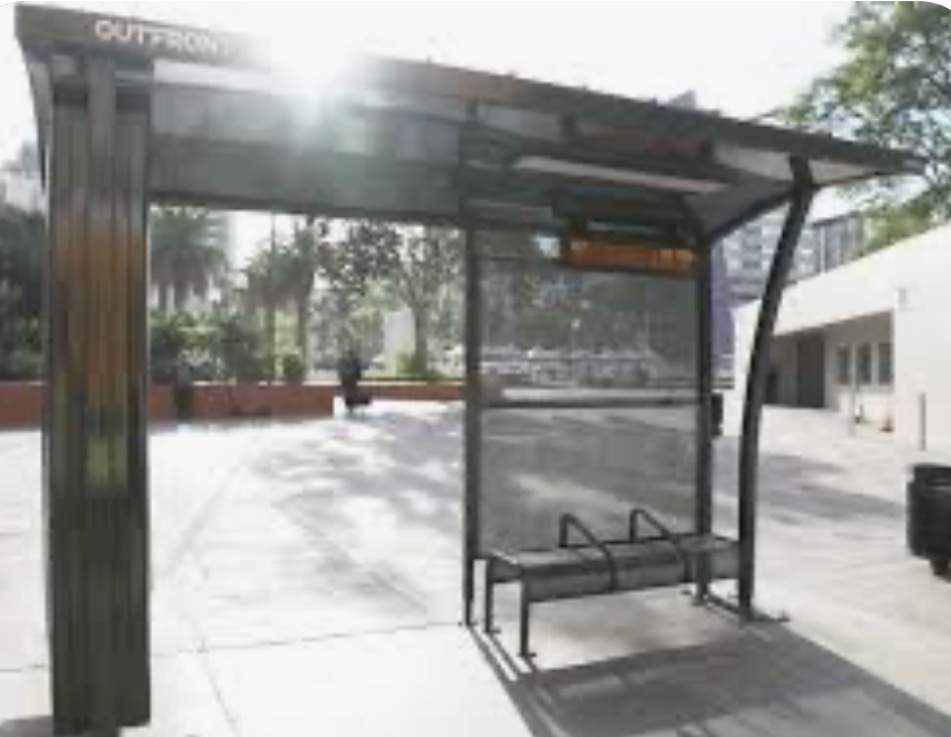
Freedom. A grass is greener freedom as my side of the fence is on foot or riding the bus or in a cab or mooching rides from patient friends.

It’s hard to be independent when your broader movements are, by necessity, dependent—when, at the very least, the bus driver is going to know where you came from, where you went, and, if you ride enough, most of what your story is.

I sound bitter.

I am a little bitter.

No one to blame but the DNA. I was born wing-clipped in Southern California. Apparently my genetic material never heard the song “Nobody Walks in LA,” or heard it and thought we would be the exception.

Special genes do make one exceptional.

I am exceptionally half-sighted. I am exceptionally good at scheduling my errands around my friends’ errands so I don’t trouble anybody too much.

I am exceptionally blessed with the gift of the gab and, by lack of automotive freedom, have gained masses of unlikely friends all over the country. There is not much else to do when you’re stuck in transit together, breathing each other’s air, than to become compatriots.

Rwandan refugee cab drivers in Nashville—that ride share guy in DC who asked me what color palm trees are—the Uber lady whose dog just died yesterday—the bus driver who wouldn’t take my ticket without putting on gloves first (she was new and we weren’t virus-stricken yet)—the disability cabbie who brought his family along at eleven at night to pick me up from work, his wife sweetly piping up into the conversation from the backseat—the Pakistani guy who asked me to marry him—the Russian guy who also asked me to marry him—that other guy who asked me to use my employee discount to buy him a coffee pot “for church.”

I suppose all of these, in truth, are my own kind of exceptional vehicle and, once-in-a-while bilious drivers’ envy aside, my clipped-freedom grass is brilliant green because of them.

-M. Ashley

Ophelia’s Opal (poetry)

When my grandmother knew she was dying
she picked out an opal for me,
had a ring designed
and sized it,
for the short time being,
for her own hand.
I was an infant then, recently diagnosed
lifelong colorless and could-be blind.

My grandmother was a force—
a farm girl who took beatings
for sneaking away to read,
a young woman who left her family
to work among foul mouthed boys
at the Pentagon during WWII,
a single mother,
a stone wall,
razor tongue,
acid wit,
first female management at the FAA.

She held me at the hospital
in a hallway while the final diagnosis
was pronounced to my parents
in a tiny, sterile room.
Her breast was warm,
though the breathing behind it was labored.
Her embrace was soothing
though her hands were not soft
from folding crust-cut sandwiches in wax paper
for her children or grandchildren’s outings
of uncomplicated youth.

She explored my hot face and closed eyelids
with her wise yet diminishing fingers,
the opal slipping forward and upside down
under her nearly exposed knuckle,
resting against my forehead,
cooling a spot just above my eyes.
She leaned forward and blessed me,
“My dear little Michelle-y,
I do hope you can see.”

-M. Ashley

Exceptional Vehicles

Let’s talk about driving. What goes unnoticed? What do we take for granted?

All you people take driving for granted.

I can’t drive because I’m legally blind and it is one of the most horrible kinds of crippling, or at least I imagine it is. Having never been an independent driver, I wouldn’t know.

I don’t know what it’s like to have a notion to go somewhere and just go. Cold night, playing Freeze Out like my dad used to do with us girls in the car—all four windows down, whoever rolls theirs up last is the winner—but with only myself as competition. I’ve never had to keep myself awake with only myself and the double yellow lolling out endlessly before me in the dark dark desert between here and Las Vegas.

I don’t know what hitting 100mph is like on that same highway, in the middle of the night, when I’m sure the CHP isn’t watching.

Yellow line, lulling you to sleep. Blaring the radio to fight it, Botts’ dots rumbling your eyes open again. The danger. The responsibility. The irresponsibility. The win when you get there somehow, miraculously, safe.

I wish I could stand somewhere alone that I drove to alone that I decided to drive to alone, and that no one but me, alone, would know about it.

Freedom. A grass is greener freedom as my side of the fence is on foot or riding the bus or in a cab or mooching rides from patient friends.

It’s hard to be independent when your broader movements are, by necessity, dependent—when, at the very least, the bus driver is going to know where you came from, where you went, and, if you ride enough, most of what your story is.

I sound bitter.

I am a little bitter.

No one to blame but the DNA. I was born wing-clipped in Southern California. Apparently my genetic material never heard the song “Nobody Walks in LA,” or heard it and thought we would be the exception.

Special genes do make one exceptional.

I am exceptionally half-sighted. I am exceptionally good at scheduling my errands around my friends’ errands so I don’t trouble anybody too much.

I am exceptionally blessed with the gift of the gab and, by lack of automotive freedom, have gained masses of unlikely friends all over the country because of it. There is not much else to do when you’re stuck in transit together, breathing each other’s air, than to become compatriots.

Rwandan refugee cab drivers in Nashville—that ride share guy in DC who asked me what color palm trees are—the Uber lady whose dog just died yesterday—the bus driver who wouldn’t take my ticket without putting on gloves first (she was new and we weren’t virus-stricken yet)—the disability cabbie who brought his family along at eleven at night to pick me up from work, his wife sweetly piping up into the conversation from the back—the Pakistani guy who asked me to marry him—the Russian guy who also asked me to marry him—that other guy who asked me to use my employee discount to buy him a coffee pot “for church.”

I suppose all of these, in truth, are my own kind of exceptional vehicle and, once-in-a-while bilious drivers’ envy aside, my clipped-freedom grass is brilliant green because of them.

-M.